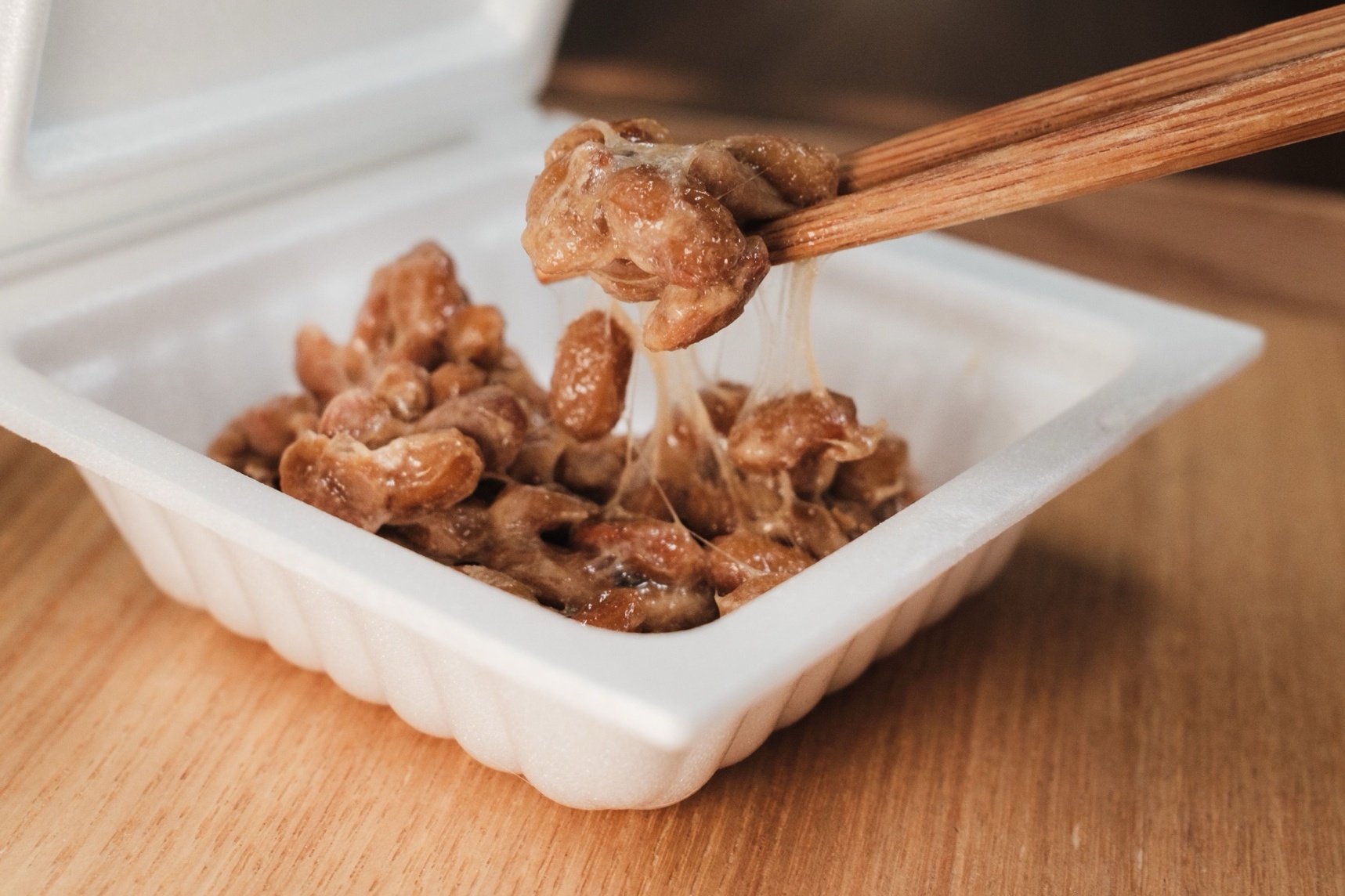
If you ever get into a food conversation with a Japanese person, there’s a good chance you’ll get asked this exact question at some point: “Can you eat natto?” It’s almost a rite of passage. Natto splits opinion hard even within Japan — the sticky, stringy texture and the smell are enough to turn plenty of Japanese people off entirely. Full disclosure: I’ve only been able to eat it myself for about three years. I’ll blame it on being from Kansai, where natto famously isn’t as popular (that’s my story and I’m sticking to it).
And yet — turns out this divisive little bean has something like a thousand years of history behind it?! Which honestly surprised me too when I first looked into it. I’m a pharmacist, so once I started digging, I couldn’t stop, and there’s a real reason natto has stuck around this long — a lot more interesting than “it’s a superfood, trust me.”
Okay, But What Is It, Actually?
Natto is fermented soybeans. That’s it, that’s the ingredient list. Whole soybeans get cooked, then inoculated with a bacteria called Bacillus subtilis (also known, more romantically, as “natto bacteria”), and left to ferment for about a day. That bacteria is what gives natto its whole personality — the stickiness, the smell, the slightly funky flavor, all of it.
If you’ve never seen it in person: when you stir it, natto gets stringy, almost like melted cheese but stickier and a little foamy. This is normal. This is not a sign anything went wrong. In fact, the stringier it gets, the more you’re “supposed” to be doing it right — some people stir for a solid minute before eating.
Why People Actually Eat This Stuff
Once you get past the texture (which, fair, takes some people a minute), natto is genuinely one of the most nutrient-dense foods in the Japanese diet:
- Protein — a full serving has a solid amount of plant-based protein, which is part of why it’s such a natto-and-rice breakfast staple
- Vitamin K2 — natto is basically the best natural source of K2 out there, more than almost anything else you’ll find on a plate. K2 plays a role in bone density and cardiovascular health that doesn’t get nearly enough attention outside Japan
- Nattokinase — an enzyme produced during fermentation that’s been studied for its potential role in supporting healthy blood flow. It’s actually one of the more interesting compounds to come out of Japanese fermentation research
- Probiotics — like most fermented foods, natto brings live beneficial bacteria along for the ride, which is good news for your gut
How People Actually Eat It
The classic move is natto over hot rice, with a packet of soy sauce (or the little mustard packet that usually comes with it) stirred in. That’s the everyday breakfast version, and it’s genuinely the easiest way to try it for the first time.
Beyond that, though, natto shows up in more places than you’d expect:
- Mixed into miso soup
- Wrapped in nori with rice, like a little hand roll
- Stirred into okonomiyaki batter
- Tossed with chopped green onion and a raw egg yolk for the “extra committed” version
If you’re trying it for the first time, I’d actually recommend starting with the rice-and-soy-sauce version rather than jumping straight to the more adventurous combos. Get used to the texture first, then branch out. And honestly, don’t overthink the smell — it’s much milder in person than people online make it sound, and it fades almost completely once it’s mixed with rice and sauce.
What to Look For If You’re Buying It
Most natto sold outside Japan is pretty standard, but a couple of things are worth knowing:
- Small-bean vs. large-bean — smaller soybeans (sometimes labeled hikiwari if they’re chopped) tend to be stickier and easier to eat for beginners, since the texture is less “whole bean, whole surprise”
- Additives — some mass-market natto includes a sauce packet with added sugar, MSG, or preservatives. If you want the cleanest version, look for plain natto and season it yourself with just soy sauce. My own favorite is a dashi-based soy sauce (dashi-joyu) — it adds a little extra depth without needing anything else
- Frozen vs. fresh — natto freezes well and is often sold frozen outside Japan, which is completely normal and doesn’t meaningfully affect quality. If yours comes frozen, just move it to the fridge and it’s ready to eat like normal after a few hours
A Quick Word on Trying It
If your first bite doesn’t win you over, that’s genuinely fine — plenty of Japanese people feel the same way. But I’d gently push back on writing it off after one attempt. Texture-forward foods like this tend to grow on people with a bit of repeated, low-pressure exposure. Try it a few different ways before deciding it’s not for you.
One small caution: natto is fermented and contains vitamin K, which can interact with blood-thinning medications like warfarin. If you’re on one, it’s worth a quick check with your doctor or pharmacist before making it a regular habit.
日本語要約
納豆は、蒸した大豆に納豆菌(枯草菌の一種)を加えて発酵させたシンプルな食品です。独特の粘りと香りがあり、好みが分かれる食品として知られていますが、植物性タンパク質、ビタミンK2、ナットウキナーゼ、生きた善玉菌など、栄養面では非常に優秀です。初めて食べる場合は、ご飯と醤油だけのシンプルな組み合わせから試すのがおすすめです。購入時は添加物の少ないプレーンタイプを選ぶと良いでしょう。なお、ビタミンKを含むため、ワーファリンなどの血液をサラサラにする薬を服用している方は、習慣的に食べる前にかかりつけ医や薬剤師に相談することをおすすめします。

コメント